Synonyms: Poly(lactic-co-glycolic acid)
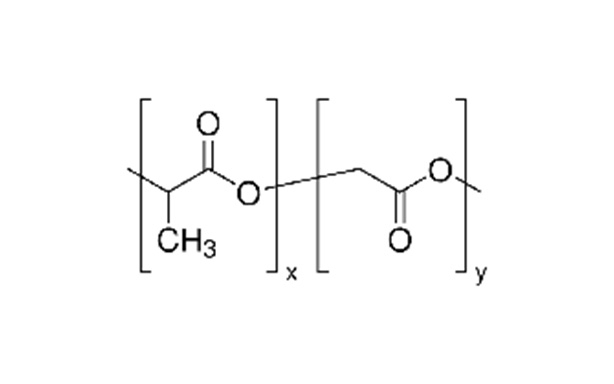
Linear Formula: [(C6H8O4)x(C4H4O4)y]n
CAS No.: 30846-39-0
● Product Description
Poly(lactic-co-glycolic acid) (PLGA), a copolymer polymerized from lactic acid (LA) and glycolic acid (GA) monomers, is a biomedical polymer that integrates the advantages of polylactic acid and glycolic acid. The Food and Drug Administration (FDA) has approved PLGA for micro and nano particles and for a number of therapeutic devices such as grafts, sutures, implants and prosthetic devices.
Key advantages of PLGA include:
•tunable degradation rate (achievable by adjusting LA/GA ratio and molecular weight, enabling its use in controlled drug/protein delivery systems and tissue engineering scaffolds);
•versatile processability (e.g., extrusion, spinning, biaxial stretching) with diverse forms (microspheres, microcapsules, nanospheres, nanofibers);
● Specifications
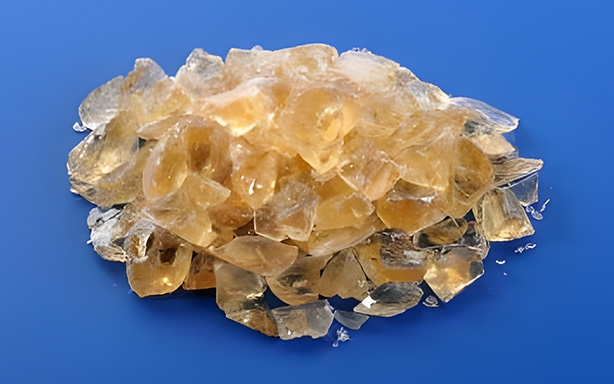
Appearance | light yellow or colorless granules |
Density: | 1.2-1.3 g/cm³ at 25 °C |
Melt Point | 140-150℃ |
Soluble in | tetrahydrofuran, acetone, ethyl acetate and chlorinated solvents. |
Storage | -15°C, protected from light and moisture |
Applications
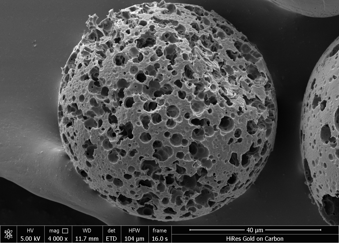
SEM Image of porous PLGA Microspheres
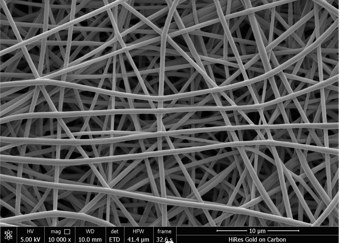
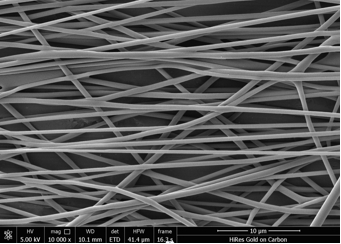
SEM Images of Random PLGA Nanofibers (Left) and Aligned PLGA Nanofibers (Right)
● Product List
Product Number | Monomer ratio | Inherent viscosity |
SorlymerTM PLGA 17 | lactide:glycolide (10:90) | 1.4-2.0 dl/g |
SorlymerTM PLGA 18 | lactide:glycolide (82:18) | 1.5-2.0 dl/g |
SorlymerTM PLGA 23 | lactide:glycolide (85:15) | 2.0-2.5 dl/g |
SorlymerTM PLGA 31 | lactide:glycolide (85:15) | 2.7-3.5 dl/g |
● References
[1] Su, Y. et al. PLGA-Based Biodegradable Microspheres in Drug Delivery: Recent Advances in Research and Application. Drug Delivery 2021, 28 (1), 1397–1418.
[2] Vlachopoulos, A., Karlioti, G. et al. Poly(Lactic Acid)-Based Microparticles for Drug Delivery Applications: An Overview of Recent Advances. Pharmaceutics 2022, 14 (2), 359.
[3] Dawei Ding, Qingdi Zhu, Recent advances of PLGA micro/nanoparticles for the delivery of biomacromolecular therapeutics, Materials Science and Engineering: C, 2018, 92, 1041-1060.
[4] Yu, CC., Chen, YW., Yeh, PY. et al. Random and aligned electrospun PLGA nanofibers embedded in microfluidic chips for cancer cell isolation and integration with air foam technology for cell release. J Nanobiotechnol, 2019, 17: 31.
[5] Milosevic, Miljan; Stojanovic, Dusica; Simic, Vladimir; et al. A Computational Model for Drug Release from PLGA Implant. Materials, 2018, 11(12): 2416.
If you want to learn more about product information
Please fill in the following information to download the product manual. We will reply to you as soon as we receive your message.