

Microfluidics and Microfluidic Chip
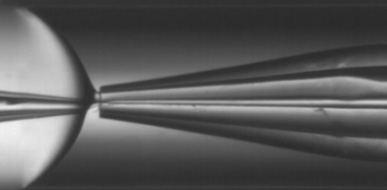
Microfluidics is a technology that manipulates tiny volumes of fluids within microscale channels or chambers. For reference, the COVID-19 coronavirus is approximately 0.1 μm in dia
Key Components of a Microfluidic System
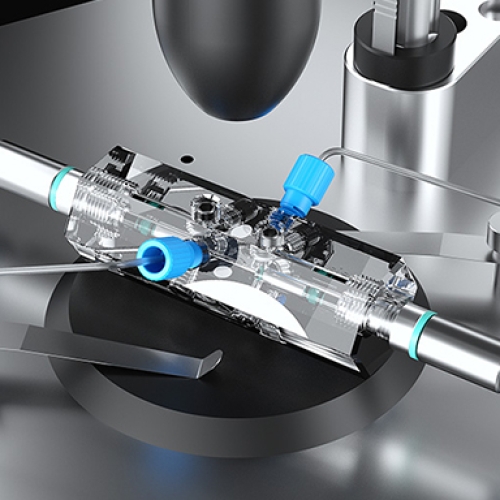
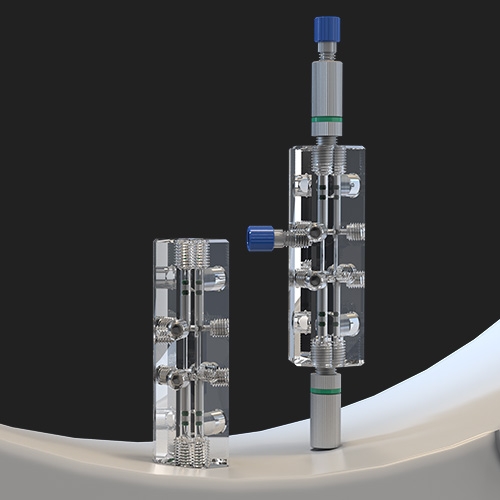
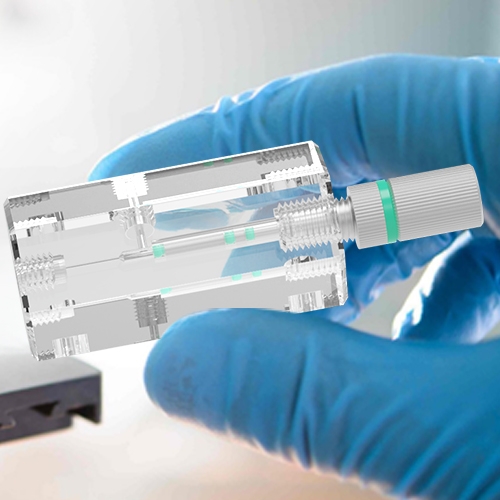
Materials of Microfluidic Chips: The chip is the most critical component of a microfluidic system, and the materials used to fabricate the microfluidic chip determine its processing methods.
Silicon and glass were the original materials first used in microfluidic applications. However, as time went on, with the advancement of new technologies, polymers, composite materials, and paper have also come into use.
The selection of these materials is based on their biocompatibility, optical transparency, chemical resistance, and mechanical properties, with each material suited for specific applications.
For certain experiments, a combination of these three types of materials is required to achieve the desired properties of the microfluidic chip. Each material has its specific chemical and physical properties, and the material selection depends on:
· Application requirements
· Solvent type, sample, buffer solution and their polarity
· Microchannel design
· Budget
Chip Material - Silicon
Silicon was the first material applied to microfluidic chips[2], and it was initially selected for its:
· Resistance to organic solvents
· Superior thermal conductivity
· Surface stability
However, silicon-based microfluidic chips are difficult to handle due to their high hardness, making it challenging to fabricate active microfluidic components such as microvalves or micropumps. Another drawback is that silicon exhibits significant opacity during optical detection. It was quickly replaced by glass and polymers. In addition, due to its higher cost compared to other materials, silicon-based microfluidic chips are not widely used in the field of microfluidic research.
Chip Material - Glass
After the initial focus on silicon materials, glass became the material of choice for constructing microfluidic chips[3]. Glass is an amorphous material with excellent optical transparency and electrical insulation properties. Both glass and silicon possess the aforementioned advantages in microfluidic experiments, while glass also has its unique benefits:
· Well-defined surface chemistry
· Excellent light transmittance
· Superior high-pressure resistance
· Biocompatibility
· Chemical inertness
· Enables high-efficiency coating
· Compatibility with most biological samples
These advantages make it the material of choice for many applications. The main limitations of this material are its hardness and relatively high processing cost.
Chip Material - Polymers
Polymer-based microfluidic chips were introduced several years later than silicon/glass microfluidic chips. A wide variety of polymers offer great flexibility in selecting suitable materials with specific properties, as they are readily available, less expensive, more robust, and require faster fabrication processes[4]. Common polymer materials used to construct microfluidic chips include:
Polydimethylsiloxane (PDMS)
PDMS is the material of choice for the rapid prototyping of microfluidic devices. PDMS chips are commonly used in laboratories, especially in academia, due to their low cost and ease of fabrication. The main advantages of PDMS microfluidic chips include:
· Oxygen and gas permeability, which facilitates the delivery of oxygen and carbon dioxide in cell research and long-term experiments
· Optical transparency
· Elasticity
· Non-toxicity
· Biocompatibility
· Ability to create complex microfluidic designs through multi-layer stacking
· Relatively low cost
One of the main disadvantages of PDMS chips is their hydrophobicity. As a result, it is difficult to introduce aqueous solutions into the microchannels, and hydrophobic analytes can be adsorbed onto the surface of PDMS chips, thereby interfering with the analysis. PDMS surface modification is now available to avoid problems caused by hydrophobicity. Another major limitation of PDMS chips is that they are not suitable for high-pressure operation, as high pressure can alter the channel geometry and easily cause leakage.
Cyclic Olefin Copolymer (COC)
Cyclic Olefin Copolymer (COC) is a thermoplastic material composed of cyclic olefin monomers and linear olefins. COC has many favorable properties, including low water absorption, excellent electrical insulation, long-term surface treatment stability, and resistance to various acids and solvents. It is an ideal material for a wide range of applications in the biological, membrane, and semiconductor fields. COC is known for its rigidity, optical clarity, and heat deflection temperature, which ranges between 70°C and 170°C depending on the COC grade. Microchannels in COC can be fabricated using a variety of processes, including micro-milling, injection molding, and hot embossing.
Polymethylmethacrylate (PMMA)
PMMA is an inexpensive thermoplastic polymer with excellent optical properties, such as high transparency and refractive index. It is a suitable material for fabricating microfluidic devices due to its ease of processing. PMMA is also biocompatible and can be easily sterilized via various sterilization methods, such as autoclaving and chemical sterilization, making it suitable for biotechnological and biomedical applications. However, PMMA has some limitations, including high hydrophobicity and low mechanical strength.
Architecture of Microfluidic Chips
The architecture of microfluidic chips can range from simple single-layer designs to complex multi-layer systems. It typically includes features such as microchannels, chambers, and wells, all designed to handle fluids at the microscale.
Microfluidic Flow Control
Microfluidic flow control is a critical component in the development and operation of any microfluidic device. It enables the precise manipulation and delivery of small volumes of liquid, thus supporting a wide range of applications including pharmaceutical research, lab-on-a-chip systems, and point-of-care diagnostics. The most widely used methods for controlling microfluidic flow include peristaltic pumps, pressure controllers, and syringe pumps.
Integration with Other Microfluidic Units
Microfluidic devices often require optical detection or analysis, and integration with microscopes, spectrometers, or other optical systems enables real-time monitoring or analysis of the fluids within the device. Some microfluidic applications require precise temperature control, and integration with heating or cooling systems ensures that the fluids inside the device are maintained at the required temperature.
Integration of microfluidic products with automated systems (such as robotic arms or programmable logic controllers) enables high-throughput and reproducible experiments. Integration with data acquisition systems (such as sensors or data loggers) facilitates the capture and analysis of data generated by microfluidic devices. Overall, the successful integration of microfluidic products typically requires a multidisciplinary approach, involving expertise in fluid dynamics, optics, electronics, software development, and biology or chemistry, depending on the specific application.
Application Fields of Microfluidics
Microfluidics technology has applications in multiple fields including chemistry, biology, physics, engineering, and medicine[5]. Based on the nature of the application, the application fields of microfluidics are broadly divided into the following categories.
• For Analytical Applications: This category includes applications using microfluidics for chemical and biochemical analysis, such as the separation, mixing, detection, and quantification of analytes. Examples of analytical microfluidic devices include microfluidic flow cells for genomic analysis, proteomic analysis, as well as cell analysis and sorting.
• For Diagnostic Applications: This category includes applications using microfluidics to obtain diagnostic results from small samples. Examples of diagnostic microfluidic applications include point-of-care diagnostics, environmental monitoring, and food safety testing.
• For Biomedical Applications: This category includes applications using microfluidics technology for biomedical research and clinical applications, such as cell culture, drug delivery, and organs-on-chips.
• For Chemical Synthesis Applications: This category includes applications using microfluidics technology to synthesize and prepare functional materials (such as nanoparticles, emulsions, and microspheres). Examples of synthetic microfluidic devices include microfluidic bioreactors and microfluidic droplet generators.
References
Whitesides, George M. The origins and the future of microfluidics. Nature. 2006. 442 (7101): 368–373.
da Ponte, R. M., Gaio, N., et al. Monolithic integration of a smart temperature sensor on a modular silicon-based organ-on-a-chip device. Sensors Actuators A Phys. 2021. 317, 112439.
Orazi, L., Siciliani, V., et al. Ultrafast laser micromanufacturing of microfluidic devices. Procedia CIRP. 2022. 110, 122–127.
Rodríguez CF, Andrade-Pérez V, et al. Breaking the clean room barrier: exploring low-cost alternatives for microfluidic devices. Front. Bioeng. Biotechnol. 2023. 11:1176557.
https://en.wikipedia.org/wiki/Microfluidics