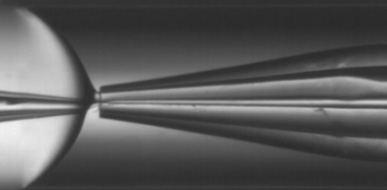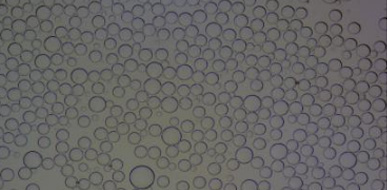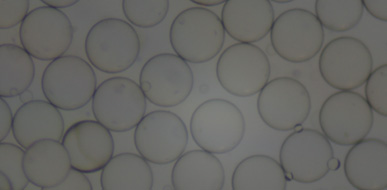


The following key elements are required to generate droplets in a microfluidic system:
• Chips with microchannel designs of varying dimensions
• Immiscible fluids
• Surfactants
• Flow control systems
The principle of droplet generation involves multiple physical aspects, and is first determined by the material and channel design of the selected microfluidic chip.
Common Types of Droplet Microfluidic Chips
Droplet microfluidics has undergone several major breakthroughs in chip/device construction: First, in 1998, Xia et al. proposed the soft lithography method for polydimethylsiloxane (PDMS). The advent of PDMS was a critical breakthrough in microfluidic technology, laying a solid foundation for its vigorous development.
In 2001, Thorsen et al. broke through the limitations of continuous flow and achieved droplet shearing, opening the chapter of droplet microfluidics.
Subsequently, in 2005, Utada et al. from Harvard University fabricated microfluidic devices using glass capillaries, which enriched the technical methodologies of microfluidics.
In 2016, a number of practical, easy-to-assemble microfluidic devices emerged. They are mainly assembled using common materials (such as capillaries, steel needles, and connecting fittings) without requirements for professional skills or equipment. The reversible combination of different components also enables flexible design of multifunctional devices to generate highly controllable single, double, or multiphase dispersed emulsion droplets.
To date, most experiments on microsphere preparation via microfluidics are based on PDMS soft lithography devices and glass capillary devices.
These two types of devices each have their own advantages and limitations: Due to the inherent properties of the material, PDMS devices absorb hydrophobic molecules as the fluid passes through the inner wall of the channel, which in turn interferes with the quantitative analysis of the experiment. Even with surface modification technology, it is difficult to achieve the desired effect.
Microfluidic systems assembled with capillaries do not require wall modification, but have extremely high requirements for the dimensional accuracy and cleanliness of the device, and the glass channels are very prone to clogging during experimental operations.
For the preparation of microdroplets with high monodispersity and controllable morphology, glass capillary-based microfluidic chips have the following advantages over chips fabricated by etching microchannels on PDMS, PMMA, or plain glass slides:
• Simple channel construction
• One-step preparation of droplets with complex structures
• Transparent channels for easy real-time and omnidirectional observation of the microdroplet (microparticle) preparation process
• Surface wettability and biocompatibility
• Organic solvent resistance, cleanability, and long service life
Advantages | Excellent optical performance | High chemical stabilit | Easy fabrication |
chemical inertness | Excellent surface modification capabilit | Flexible assembly | |
Biocompatibilit | 3D microchannels | Low cost | |
Limitations | Poor surface modification performance | High cleanliness requirement | Poor stability |
2D microchannel | Prone to cloggin | Difficult observatio | |
Low high-pressure resistanc | Brittle and fragil | Low reproducibility | |
Structural Design of Droplet Microfluidic Chips
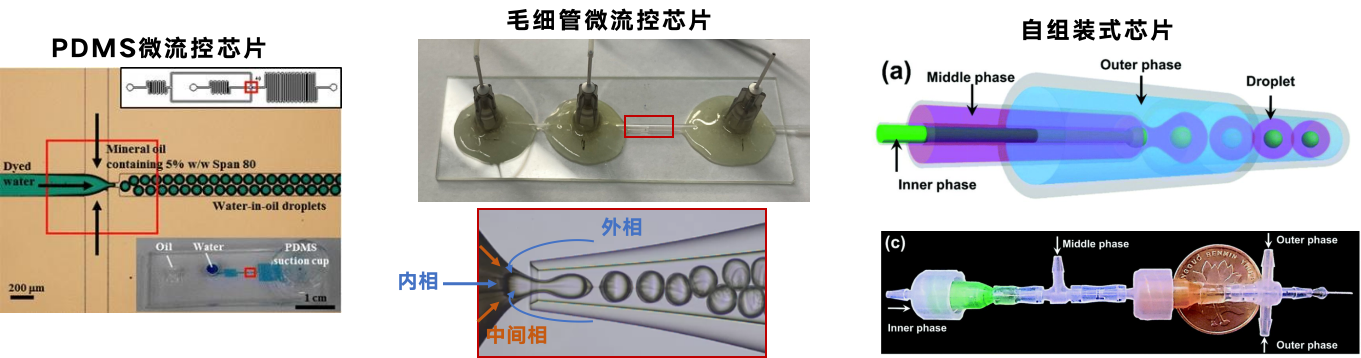
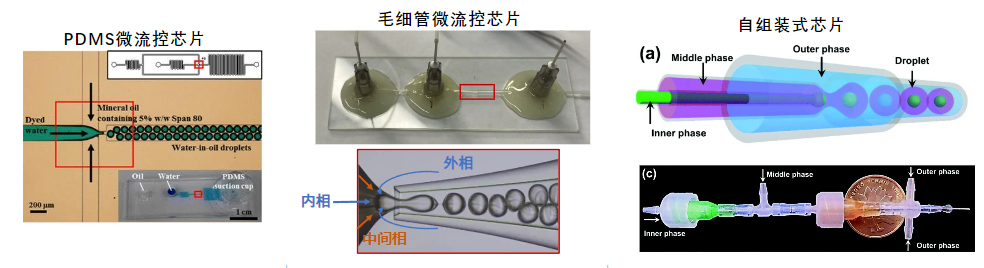
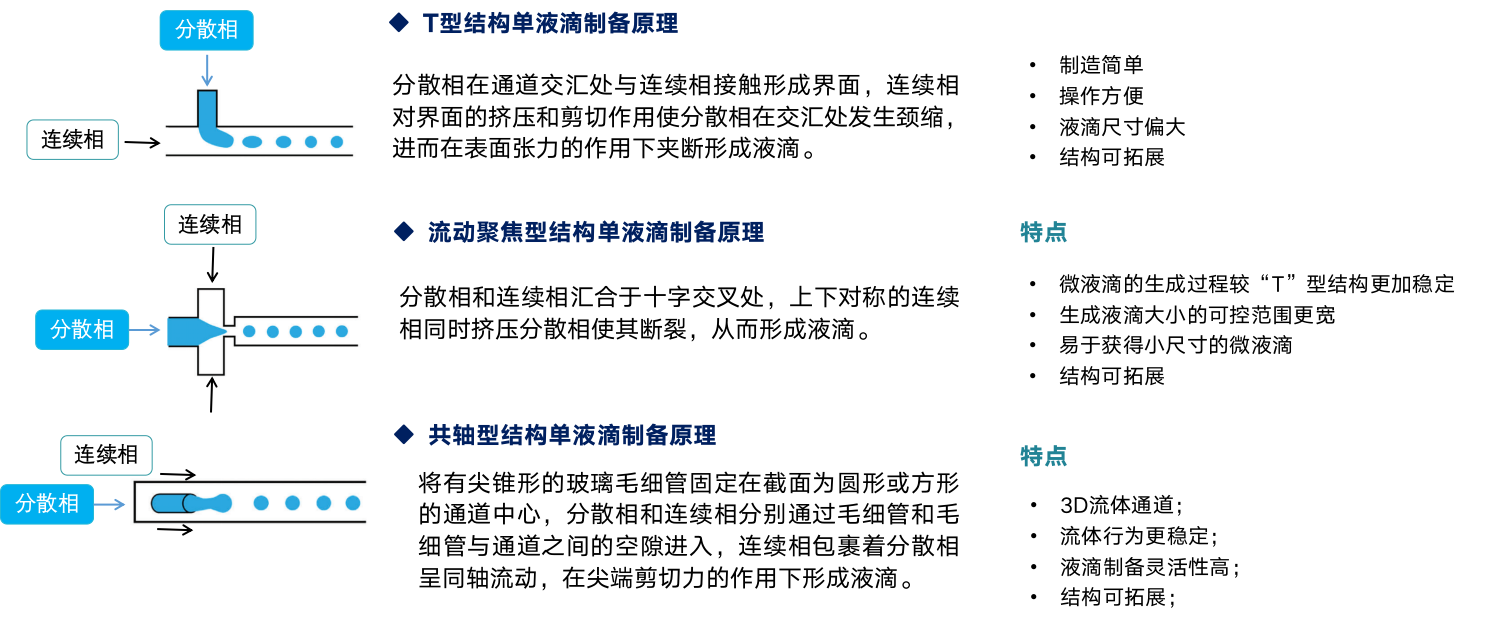
The above two types of devices have given rise to three main structures (as shown in the figure below): the T-junction and flow-focusing structures of PDMS chips (schematic diagrams from reference [5]), and the co-flow structure of glass capillary chips, all of which are used for the preparation of single droplets.
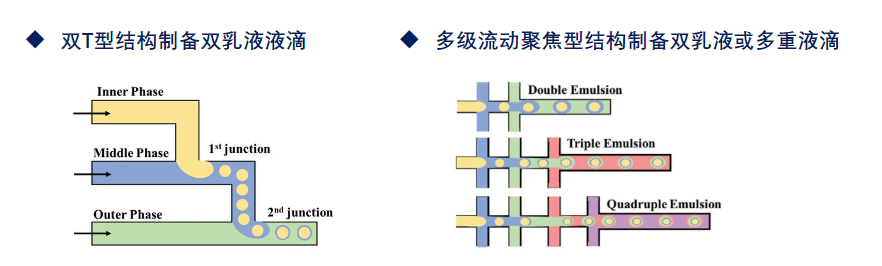
By connecting T-junction/flow-focusing channels in multi-stage series, double emulsion droplets or complex multiple emulsion droplets can be formed through two-step or multi-step emulsification.
Minor modifications can be made on the basis of the co-flow structure. For example, two capillaries with opposite tips are arranged coaxially in the channel, and the fluid is squeezed by the constricted orifice of the collection capillary to produce a focusing effect, forming a co-flow flow-focusing hybrid structure, which is more conducive to the generation of small-sized droplets.

Comparison of Droplet Microfluidic Chips

Upgrading and Optimization of Glass Capillary-Based Microfluidic Chips
For the preparation of microdroplets with high monodispersity and controllable morphology, glass capillary-based microfluidic chips have the following advantages over PDMS or other polymer-based chips and glass slide chips:
• Simple channel construction
• One-step preparation of droplets with complex structures
• Transparent channels for easy real-time and omnidirectional observation of the microdroplet (microparticle) preparation process
• Surface wettability and biocompatibility
• Organic solvent resistance, cleanability, and long service life
However, traditional chips of this type are usually assembled by fixing coaxially aligned glass capillaries on a glass slide or via such a modular approach.
The existing technical challenges are as follows: The alignment of capillaries is a manual, experience-dependent process, which cannot guarantee precise three-dimensional coaxial alignment, and thus cannot ensure the stable preparation of microdroplets.
Adhesives are used for the fixation of capillaries and/or the sealing of microchannels inside the chip, which are not resistant to organic solvents and prone to liquid leakage. Partial clogging or other damage to the chip will lead to abnormal fluid flow and even chip scrapping, which severely reduces the fabrication efficiency and quality of the chip.
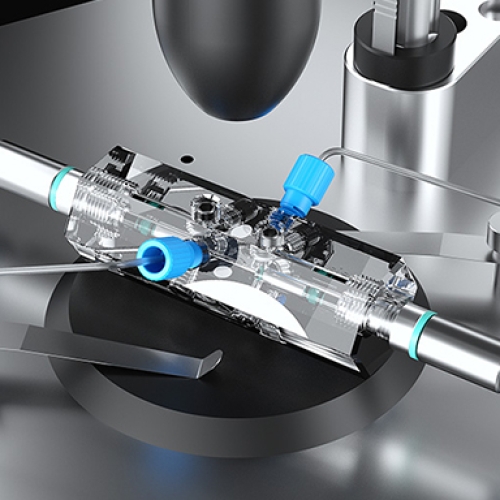
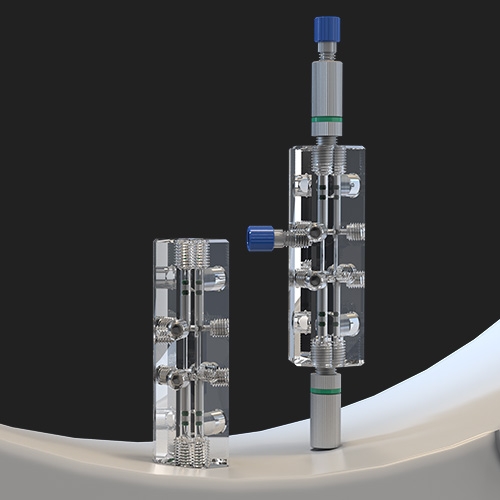
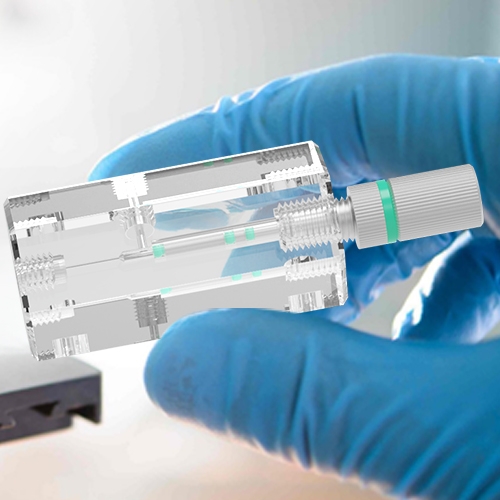
We have improved the design and fabrication process of existing glass capillary-based microfluidic chips. While ensuring the precise coaxial alignment of capillaries, we have achieved adhesive-free sealing, fixation, and fluid feeding. Meanwhile, the chip is detachable, cleanable, and reusable, which has important application value for the popularization of microfluidic chips and the standardized preparation of microdroplets.

References
1. XIA Y, WHITESIDES G M. Soft lithography. Encyclopedia of Nanotechnology, 1998, 37(5): 153-184.
2. THORSEN T, ROBERTS R W, ARNOLD F H, et al. Dynamic pattern formation in a vesicle-generating microfluidic device. Physical Review Letters, 2001, 86(18): 4163-4166.
3. UTADA A S, LORENCEAU E, LINK D R, et al. Monodisperse double emulsions generated from a microcapillary device. Science, 2005, 308(5721): 537-541.
4. T. Li, L. Zhao, W. Liu, J. Xu, J. Wang. Simple and reusable off-the-shelf microfluidic devices for the versatile generation of droplets. Lab Chip, 2016, 16, 4718.
5. Long F, Guo Y, Zhang Z, Wang J, Ren Y, Cheng Y, Xu G. Recent Progress of Droplet Microfluidic Emulsification Based Synthesis of Functional Microparticles. Glob Chall. 2023 Aug 11;7(9):2300063.