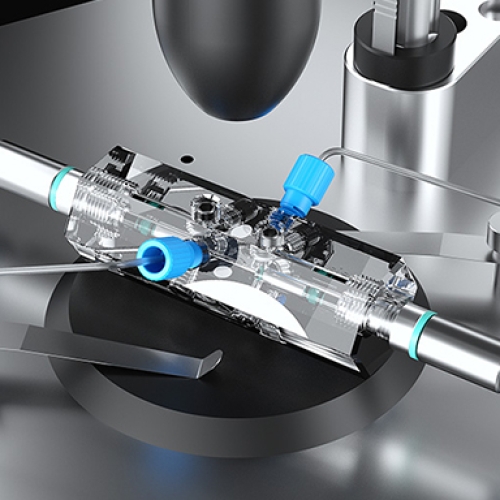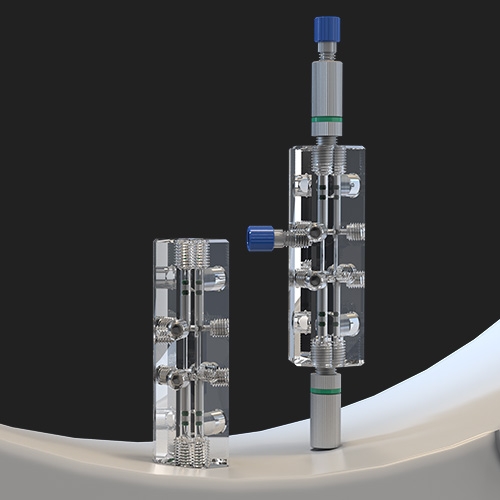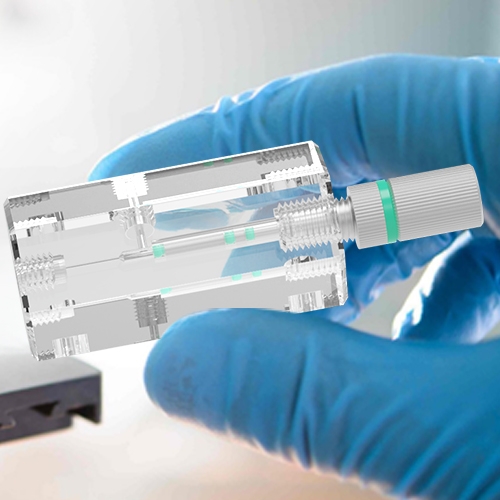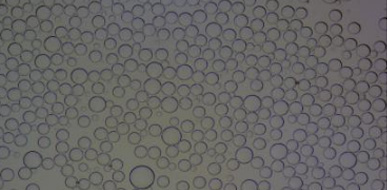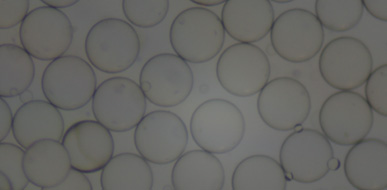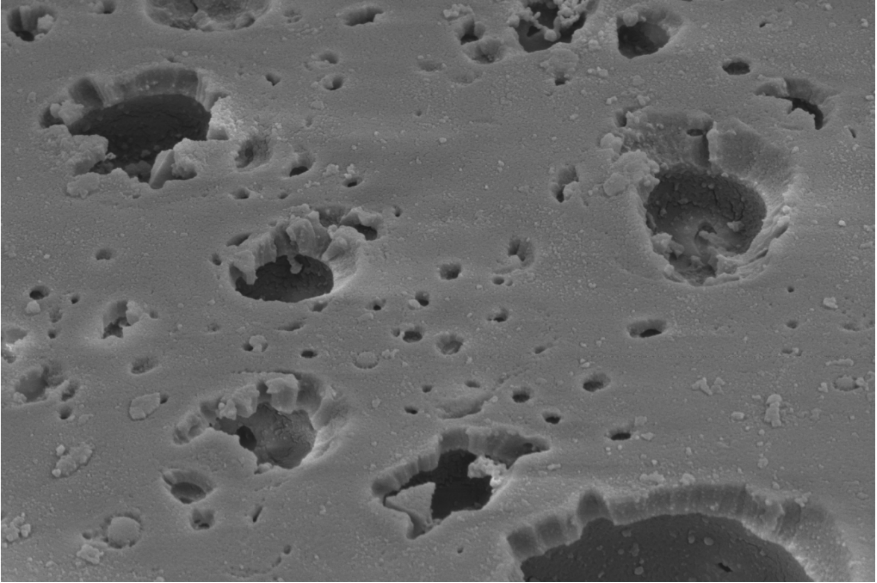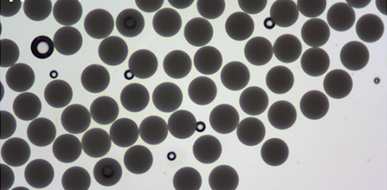

Any liquid contains a certain amount of dissolved gas, which depends on the solubility of each gas. Due to the liquid injection or aspiration method, the pressure inside the microfluidic chip will change, resulting in lower gas solubility of the liquid, which makes it prone to generate air bubbles. If these air bubbles are trapped in the dead corners, micropores and sharp corners of the internal microchannels of the chip, they are difficult to remove and will affect the accuracy and stability of the experiment. You can try the following methods to remove air bubbles:
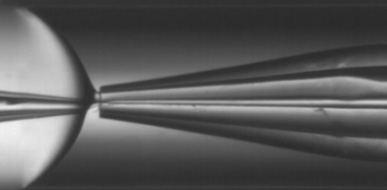
• Flushing with a high flow rate: A high fluid flow rate helps to dislodge air bubbles and push them toward the outlet for elimination. When preparing double emulsions with the DUAL chip, if air bubbles wrap around the injection capillary, rapid injection of the middle phase and outer phase liquids can be performed simultaneously, and the air bubbles can be pushed out by the impact force of the counter-flow of the two phases.
• Vibration method: Gently vibrate the catheter connected to the outer phase solution or the collection catheter to help release air bubbles from the chip.
• Using surfactants: To facilitate the dislodgement of air bubbles, a buffer solution containing surfactants can be added to the microfluidic solution, thereby accelerating the separation of air bubbles from the tube wall or channel wall.
During microfluidic experiments, we should try to avoid the introduction of air bubbles by taking the following measures:
Before the start of the experiment, remove air bubbles from the experimental solution by filtration prior to injecting it into the chip channels.
Check the tightness of all interfaces.
Minimize the number of connectors.
If the solution contains solvents with a low boiling point, experiments under heating conditions should be avoided.