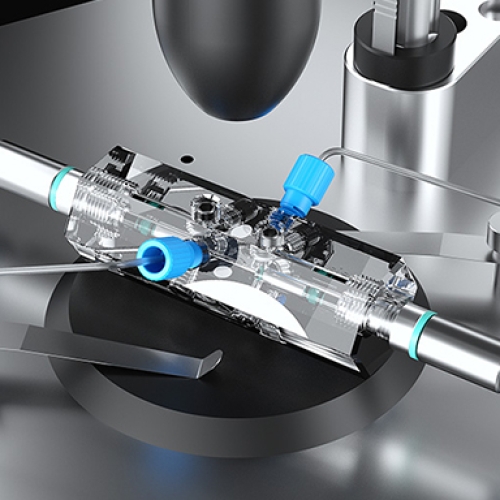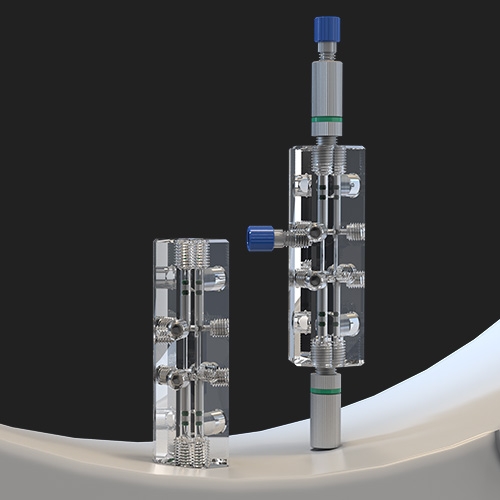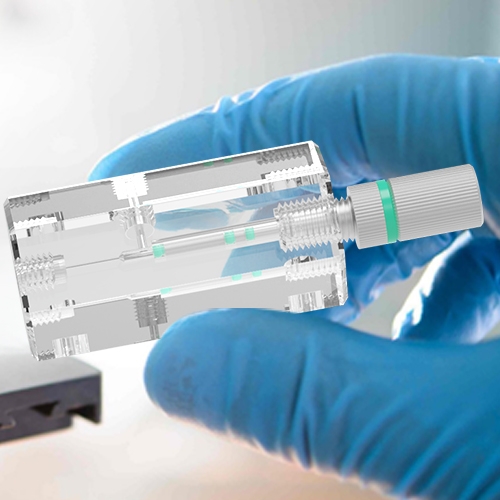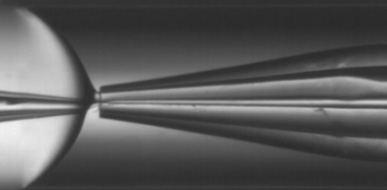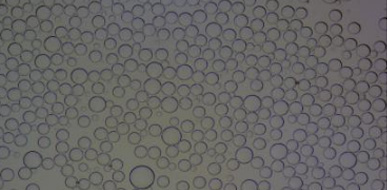

The gap of the internal microchannels of the chip may be ≤ 20 μm, and the size of the tapered capillary is also around tens of microns. If the fluid injected into the chip contains particulates, impurities, or solid reactants are generated in the channels, it is very easy to cause clogging of the microchannels. To reduce the risk of chip clogging, all liquids and gases, including any cleaning solutions, shall be filtered prior to contact with any part of the microfluidic chip. It is recommended to filter the fluids through a 0.2 μm filter before introducing them into the device. Even if the experiment is carried out in strict accordance with the operating procedures of the microfluidic chip, it is still inevitable to encounter microchannel clogging, which may force the experiment to be restarted from the beginning.
If the channels are clogged by large occlusions in the chip channels, the following methods can be adopted:
• Continue flushing with a higher flow rate to make the occlusions flow out through the outlet of the collection tube.
• If the clog cannot flow through the collection tube, back-flushing can be performed to flush the occlusions in the channel to one of the inlet ends of the chip.
• If the occlusions are generated products, replace the solvent that can dissolve them to clean the channels.
If none of the above methods can flush out the occlusions, and the occlusions are fixed at a certain position inside the microchannel, the chip can be disassembled, and the chip body and capillaries can be cleaned separately by ultrasonic cleaning. The specific operation is as follows: Place the chip in a clean beaker (capillaries can be placed in a centrifuge tube), add an appropriate cleaning solvent, perform ultrasonic cleaning for a period of time, then take it out for observation and flushing. Repeat this process several times to check whether the residues can be washed away and the inside of the chip can be cleaned thoroughly. For specific operating procedures, please consult our professional technical personnel.