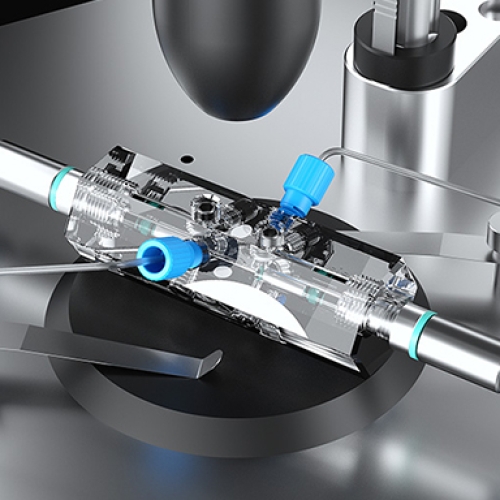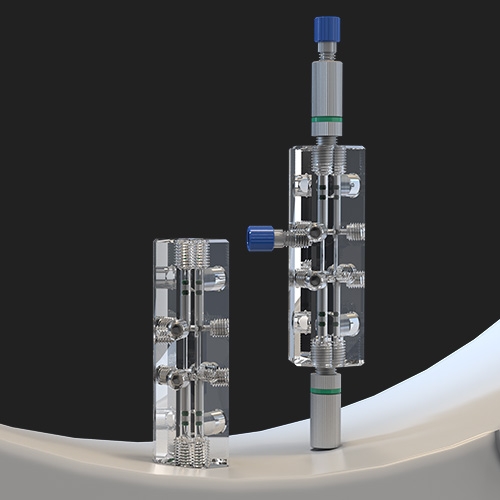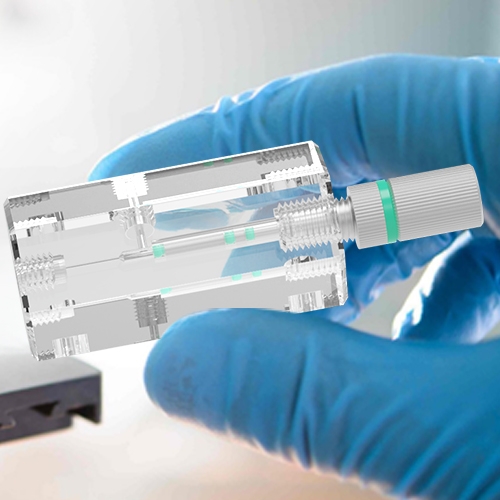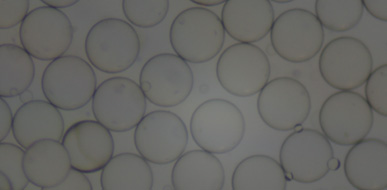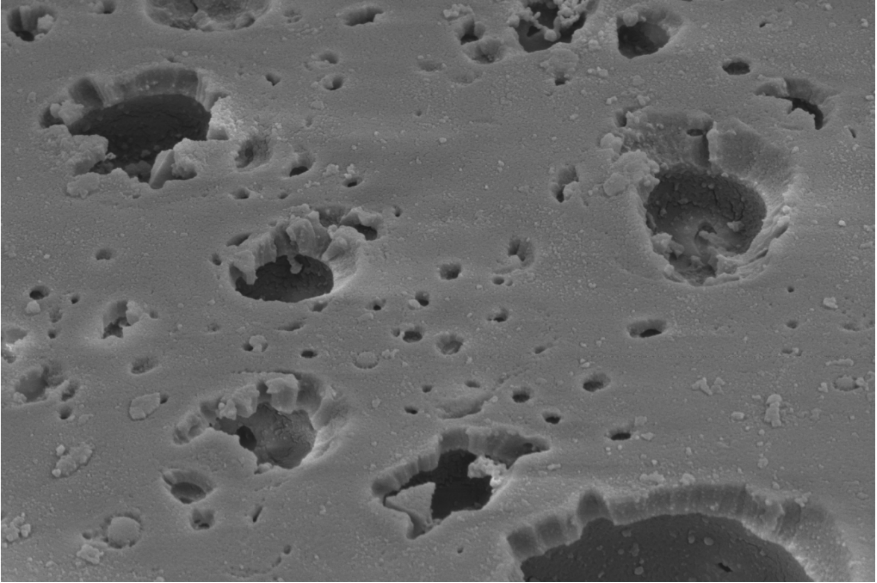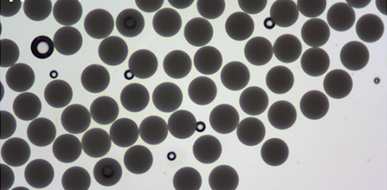


The selection of the appropriate chip cleaning method is determined by the chip material and the type of residues inside the chip.
ALFA Droplet Microfluidic Chip: As the ALFA chip is not resistant to organic solvents (including ethanol), the solution systems it is used with are usually aqueous and oil phases. After using the chip, rinse it with a low-concentration cleaning solution (such as dish soap), followed by thorough rinsing with deionized water.
MONO & DUAL Microfluidic Chips: For MONO and DUAL microfluidic chips, if there are organic residues in the chip, it is recommended to rinse the chip with ethanol first, then rinse with deionized water and leave it to air dry.
The cleaning of the chip can refer to the following steps:
Push the residual fluid out of the chip at an appropriate flow rate, then rinse the chip channels with the same reagent used in the experiment.
Rinse the microchannels of the chip with deionized water.
Rinse the chip channels with ethanol or isopropanol (IPA) solution. Note: IPA has excellent volatility and will not leave liquid residue on the surface of the chip channels. (Note: Step 2 and Step 3 can be repeated alternately.)
Blow dry the liquid inside the chip channels with gas (air, oxygen, nitrogen, argon, etc.).
The cleaned chip and all connecting components shall be properly stored in an environment free from dust and contaminants.